Maui Land and Pineapple (MLP) Update
Maui Land & Pineapple Co, the Hawaii based pineapple producer/land developer has continued to fly under the radar since our initial research. The company had a solid 2005 with revenues of $186.7 million, up from 2004's $153.2 million and net income of $14.6 million, from a loss of $400 thousand. Through the 9 months ended 9/30/06, the company reported revenues of $132.4 million, and net income of $8.7 million (vs $118.1, $9.7 for the same period last year).
We originally took a position in MLP because of its land holdings (28,000+ acres) in Hawaii. We were not crazy about their low margin pineapple business, but to us, that’s a freebie.
Resort segment: Kapalua Land Company
Nine Miles of Hawaii Beachfront
Part of Maui Land’s 28,200 acres include 22,800 in West Maui, including Kapalua Resort a golf community, which borders the ocean, and boasts 3 beaches, 2 hotels, 3 championship golf courses, 10 restaurants, and 700+ single family homes and condominiums. Oh, did I mention the 9 miles of beachfront property?
Approval for Expansion
The big news for MLP was the recent decision by the Maui Planning Commission which approved Maui Land's plans to build multimillion-dollar homes and a new private golf course at the Kapalua Resort. This potentially opens the door for the company to finally unlock shareholder value.
Valuation
At it's current enterprise value of $263 million, that MLP's land is valued at about $9300 per acre, on an Enterprise Value/Acre basis, a calculation we are fond of here at Cheap Stocks. Granted, some of the land is preserved, and land utilized in the pineapple operation (6000 acres) is not nearly as valuable as the Kapalua Resort property. But, a compelling calculation nonetheless.
*The author has a position in this stock. This is neither a recommendation to buy or sell this security. All information provided believed to be reliable and presented for information purposes only.
Wednesday, December 13, 2006


Friday, December 08, 2006
Jones Soda(JSDA)Goes Back to Basics
Jones Soda's recent announcement of the introduction of a sugar sweetened soda, as opposed to the more typical corn syrup sweetened variety, went largely unnoticed by the Street. Can you blame them? What's the big deal. Corn syrup or sugar? Who cares, what's the difference anyway?
Soda afficionados know that there is a huge difference. Pure cane sugar just plain tastes better. Some of us go to great lengths prior to Passover (your very Presbyterian Cheap Stocks editor included) to obtain supplies of Coca Cola's kosher version of Coke, made with sugar, produced in limited quantities and available only in certain parts of the country. It tastes like the Coca Cola from many years ago, much better than the corn syrup version, with a much healthier head of foam.
Jones is touting their soon to be released Jones Pure Cane Sugar Soda as a healthier alternative to corn syrup sweetened sodas. While cane sugar is natural, high fructose corn syrup is not. Whether or not there are health benefits is up for debate.
Jones sees this new release as a differentiator in the already highly competitive soft drink market. Ultimately, if taste wins out, perhaps Jones and ultimately shareholders will benefit.
*The author has a position in this stock. This is neither a recommendation to buy or sell this security. All information provided believed to be reliable and presented for information purposes only.
Friday, December 01, 2006
Avoca (AVOA) Reports Third Quarter Earnings; $1000 dividend in 2007?
Avoca Inc, the owner of 16000 acre Avoca Island off the coast of New Orleans, which generates the bulk of revenue from gas royalties, recently issued 3rd quarter financial statements. For most companies the act of doing this is both required and expected, but for Avoca, which delisted in 2004, there is no requirement. Still, the company continues to keep shareholders well informed.
For the 3rd quarter, revenues were $3.5 million, up sharply over last year's $1.3 million. However, $1.8 million of that represented proceeds from the settlement of a lawsuit. Net income was $2.3 million, or $291.32 per share up form last year's $835,000, or $103.65 per share. For the nine months ended 9/30/06, revenues were $9.95 million, (vs $3.7 million), and net income was $6.6 million, or $818.64 per share (vs $2.3 million, $291.05/shr).
Last year, Avoca paid a $400 dividend in January (declared in December). Since the company typically pays out most of its earning in dividends, we expect this year’s dividend may be in the range of $800-$1000.
Since Avoca is thinly (if ever) traded, its difficult to get a true sense of valuation. Indeed, the company has just 8059 shares outstanding, and the most recent bid price was $6000 (no ask). If that is truly representative of Avoca’s value, that would give the company a market cap of $48 million, a p/e in the 4-5 range, a trailing twelve month dividend yield of 6.7%, and an expected yield of between 12 and 16%, if our estimates are correct.
If that sounds too good to be true, keep in mind the risks inherent in investing in such a company. First, there is no liquidity. Shares are difficult to buy, and sell. Second, Avoca operates in a commodity based (gas royalties) business where there can be very wide price swings. Third, information is difficult to find. Before Avoca delisted (1 for 100 reverse split, to avoid costly provisions of SarbOx) they were required to file financials with the SEC, now they are under no such requirement. Fortunately, for shareholders, Avoca continues to send audited financials, not available to anyone else.
*The author has a position in this stock. This is neither a recommendation to buy or sell this security. All information provided believed to be reliable and presented for information purposes only.
Monday, November 27, 2006
PICO Holdings (PICO) Reports a Strong 3rd quarter
PICO Holdings, which we’ve referred to in the past as the “poor man’s” Berkshire Hathaway, recently reported third quarter sales of $37.2 million, up from last year’s $8.1 million, with net income of $11.8 million versus last year’s $9.2 million loss. The increase in revenue and net income was due primarily to the sale of the Spring Valley Ranch and related water rights for $22 million, or $18.8 million pre-tax. The company originally acquired Spring Valley out of bankruptcy in 2000.
PICO continues to sell off Nevada land, but still has 648,000 acres in inventory, or about 1000 square miles. When we originally purchased PICO, land holdings were about 1.2 million acres, and the company continues to opportunistically convert this land into cash.
Hyperfeed
One major disappointment has been Hyperfeed Technologies which contributed a loss of $7.8 million for the quarter. Hyperfeed appears to be the only major miscue by PICO since we’ve held shares, and we say good riddance as PICO has come to the realization that this was a terrible investment.
Water
With appeals rejected, the company continues to build the 35 mile pipeline which will annually deliver 8000 acre feet of water from Fish Springs Ranch to the North Valleys of Reno, Nevada. According to PICO, this will be the only source of water to new developments in that area.
Balance Sheet
PICO’s balance continues to be strong, with cash of $115.8 million, and investments (not including land and water rights) of $286 million. Keep in mind, though, that the increase in cash is primarily due to the May 2006 sale of 2.6 million shares of PICO common stock. Also, completion of the pipeline to Reno is expected to cost between $78 and $83 million over the next 9 to 15 months.
We continue to hold PICO shares, and believe that the company is executing well, Hyperfeed aside. Even Warren Buffet strikes out once in awhile.
Previous PICO research:
8/6/06
7/22/06
4/7/05
1/21/05
*The author has a position in this stock. This is neither a recommendation to buy or sell this security. All information provided believed to be reliable and presented for information purposes only.
Thursday, November 23, 2006
Cheap Stocks added to Stockpickr.com's Top 100
We are very pleased to have been added to this sites Top 100 Finance/ Business / Investing Blog Index. We've received frequent mentions in James Altucher's Daily Blog Watch on RealMoney.com, and are thrilled that he added us to his top 100 on Stockpickr.com as well.
We'll continue to try and push the envelope at Cheap Stocks, offering off-the-beaten path ideas. Thanks for reading, and Happy Thanksgiving!
Saturday, November 18, 2006
Schwab Weighs in on Our Porfolio, and it’s not Pretty
It’s report card time again for millions of students, and we thought it appropriate to review our grades again, that is, your Cheap Stocks editor's portfolio as graded by Charles Schwab. We ran a similar column 2/3/06, and our grades were miserable.
We were prompted to do the exercise again by a piece of mail we received from Schwab yesterday, a four page post-card size piece which states:
The fact is, we'd be afraid to ever make that phone call. The analyst on the other line would no doubt be shocked by our portfolio. He/she would probably not even recognize 90% of the names. Which is just fine with us. We still see opportunity where few others do. Sometimes to our detriment.
This is not to denigrate Schwab, or their rating system. We've had a Charles Schwab account for years, and their service has been outstanding. Plus it's natural that their stock rating system would cater to the more common names, where there's actually data available, and liquidity (unlike some of the names in our portfolio)
Our Report Card
Avoca Inc (AVOA): NC
Bactolac Pharmaceuticals (BTCP): NC
Biloxi Marsh Lands Corp (BLMC): NC
JG Boswell (BWEL): NC
Gallery of History (HIST): NC
Jones Soda (JSDA): D
Lazare Kaplan Intl (LKI): NC
Maui Land and Pineapple (MLP): F
PICO Holdings (PICO): NC
Plum Creek Timber (PCL): NC
Southwest Water (SWWC): D
St. Joes (JOE): F
Tejon Ranch (TRC): D
Tootsie Roll (TR): C
Vermont Pure Holdings (VPS): NC
Names in italics: Research in previous postings
Names bolded: New to Portfolio since previous report card
In Summary, our grade point average is a solid D, with 9 incompletes (NC). Our grades continue to slip. Last time, we had a C- and 9 incompletes. What hurt was the fact that we closed positions in some well-known, widely held large cap names.
Positions Closed Since Last Report Card:
Abbot Labs (ABT)
BHP Billiton (BHP)
McDonald's (MCD)
Merck (MRK)
Northern Orion Resources (NTO)
Temper Pedic Intl (TPX)
Infinity Pharmaceuticals (INFI)(formerly Discovery Partners)
It’s report card time again for millions of students, and we thought it appropriate to review our grades again, that is, your Cheap Stocks editor's portfolio as graded by Charles Schwab. We ran a similar column 2/3/06, and our grades were miserable.
We were prompted to do the exercise again by a piece of mail we received from Schwab yesterday, a four page post-card size piece which states:
You’ve been working so hard you haven’t had time to plan for not working
Start today with your Get On Track portfolio Counsultation
The fact is, we'd be afraid to ever make that phone call. The analyst on the other line would no doubt be shocked by our portfolio. He/she would probably not even recognize 90% of the names. Which is just fine with us. We still see opportunity where few others do. Sometimes to our detriment.
This is not to denigrate Schwab, or their rating system. We've had a Charles Schwab account for years, and their service has been outstanding. Plus it's natural that their stock rating system would cater to the more common names, where there's actually data available, and liquidity (unlike some of the names in our portfolio)
Our Report Card
Avoca Inc (AVOA): NC
Bactolac Pharmaceuticals (BTCP): NC
Biloxi Marsh Lands Corp (BLMC): NC
JG Boswell (BWEL): NC
Gallery of History (HIST): NC
Jones Soda (JSDA): D
Lazare Kaplan Intl (LKI): NC
Maui Land and Pineapple (MLP): F
PICO Holdings (PICO): NC
Plum Creek Timber (PCL): NC
Southwest Water (SWWC): D
St. Joes (JOE): F
Tejon Ranch (TRC): D
Tootsie Roll (TR): C
Vermont Pure Holdings (VPS): NC
Names in italics: Research in previous postings
Names bolded: New to Portfolio since previous report card
In Summary, our grade point average is a solid D, with 9 incompletes (NC). Our grades continue to slip. Last time, we had a C- and 9 incompletes. What hurt was the fact that we closed positions in some well-known, widely held large cap names.
Positions Closed Since Last Report Card:
Abbot Labs (ABT)
BHP Billiton (BHP)
McDonald's (MCD)
Merck (MRK)
Northern Orion Resources (NTO)
Temper Pedic Intl (TPX)
Infinity Pharmaceuticals (INFI)(formerly Discovery Partners)
Tuesday, November 14, 2006
Next 10 Net/Nets by Market Cap
As we promised in our last column, below is a list of the next ten net/nets (companies trading below their net current asset value) in order of market cap.
Adams Golf (ADGO)
Boston Communications Group (BCGI)
Peak Intl Ltd (PEAK)
Meade Instruments Corp (MEAD)
Strategic Distribution (STRD)
American Homestar Corp (AHMS)
First Aviation Svcs (FAVS)
Bexil Corp (BXL)
Praecis Pharmaceuticals (PRCS)
Eternal Technologies (ETLT)
Please proceed with caution with any of the names on this list. We have not initiated research on these companies, this is simply a list of companies meeting the net/net formula criteria. We are familiar with Adams Golf (ADGO) which happens to be one of the only profitable names, and has a relatively large cash position ($11.7 million) relative to market cap ($35 million).
*The author does not have a position in any of these companies. This is neither a recommendation to buy or sell these securities. All information provided believed to be reliable and presented for information purposes only.
Thursday, November 09, 2006
Top 10 Net/Nets by Market Cap
Since we last published this list in June, we are happy to see a few new names. Happy if only because the world of net/nets is typically very static, and it's nice to have some new blood from time to time. Still, we are not seeing many "quality" names, as convoluted as that may sound for an investment technique (companies trading below their net current asset value) bound to identify troubled companies.
Here they are, in order of market cap:
- Audiovoxx (VOXX)
- InFocus Corp (INFS)
- Harbor Acquisition Corp (HAC)
- Lazare Kaplan Intl (LKI)
- Selectica Inc (SLTC)
- CallWave Inc (CALL)
- Orthologic Corp (OLGC)
- Remec Inc (REMC)
- Inhibitex Inc (INHX)
- Intrabiotics Pharmaceuticals (IBPI)
(Companies in bold are new since our last list.)
Still slim pickings, we know. Not one of the bunch is currently profitable on a trailing 12 month basis. All but Lazare Kaplan (which we own) are awash in cash relative to market cap.
There appear to be some interesting names further down the list, but all are tiny: in the $10-$35 million market cap range. We'll save that for another day.
*The author has a position in LKI. This is neither a recommendation to buy or sell this security. All information provided believed to be reliable and presented for information purposes only.
Saturday, November 04, 2006
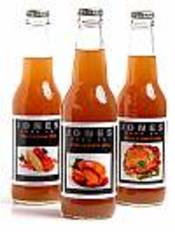
Taking the Leap: A Deep Value Investor Goes out on a Limb with Jones Soda (JSDA)
When we first published research on Jones Soda (JSDA) we acknowledged the fact that such a company had no business being within ten feet of our value oriented website. We are not too keen on small growth oriented companies trading at 100X earnings. But we are also the first to admit that there are other ways to view the world than our rather narrow view of value. While we were intrigued with Jones at the time of our research, we held out for a year before taking a position.
The Case for Jones
Lets face it, its not about the fundamentals, the company trades nowhere near its net current asset value, does not have tons of cash, does not own a nice tract of land or valuable water rights, nor is it about to delist to avoid the costly provisions of SarbOx—the typical common (and sometimes boring) themes here at Cheap Stocks. Our interest in Jones stems from what we view as a talented, innovative, creative, think-outside-the box management staff that has taken a start up to $34 million in sales in short order. Our frequent trips to Target always involve a stroll down the soda isle, and we were initially surprised to see Jones 12-packs proudly displayed (that arrangement will ultimately come to an end, but we understand that to be Jones decision, not Target’s).
Growth
2005 sales were $34.2 million, up 25% from 2004's $27.5 million. However, net income was flat at $1.3 million. For the first 9 months of 2006, sales were $28.5 million, with net income of $2.9 million, for a solid 10% profit margin. We'll have to see what Q4 brings. Make no mistake, this company is not exactly cheap at 60 times earnings, and there's a substantial amount of growth priced in.
Creativity
While creativity does not necessarily translate into cash, it may when a company is able to create strong brand awareness, and a following. Jones has done this through innovative flavors (who can forget the annual Thanksgiving releases: A limited edition run of flavors including turkey and gravy soda), packaging (the company solicits photos from Jones loyalists to be part of bottle labels), and an engaging and entertaining website.
Conclusion
Call it what you will, but for once, we've stepped out of the value box, and so far its paid off nicely. We'd only hope that Ben Graham would forgive us for our foolishnes.
*The author has a position in this stock. This is neither a recommendation to buy or sell this security. All information provided believed to be reliable and presented for information purposes only.
Tuesday, October 31, 2006
Update: Tootsie Roll Industries(TR), 3rd Quarter Results, the Gordon’s are Hanging Tough
Tootsie Roll Industries recently reported a decent 3rd quarter. Net sales of $186.4 million were up 7% year over year, while net income of $28.97 million was up 5%. Net profit margin was a healthy 15.54%, but down from last year’s 15.93%.
Our original research on Tootsie Roll focused on the company’s high level of profitability, with admittedly flat sales, in conjunction with our theory that the company would make a great takeover target. This was based not only on the attractive brand name, strong balance sheet, and relatively high profit margins, but also that the majority owners, the Gordon’s (Ellen, President, COO, and Director and Melvin, Chairman of the Board and CEO), who own 40% of the company, are aged 74 and 86 respectively. We surmised that they’d be looking for an exit strategy, and companies such as Hershey’s (HSY) and Wrigley’s (WWY) would be potential suitors.
Fast forward 2 years, and not only are the Gordon’s still in control, they’ve made a major acquisition (Concord Confections), and if Sifel Nicolaus analyst George Askew (who has a hold rating on the shares) is correct, the company may be in the market for the New England Confectionary Company (NECCO), maker of NECCO wafers, Clark Bars, and one of your editor’s old-time favorites, the Sky Bar. Askew suggests that NECCO owner UIS Corp may have the company on the block, in the $150-$200 million range. NECCO 2005 sales were $80 million.
Looks like the Gordon’s are not slowing down, but rather trying to build their brand. More power to them. We’ve been wrong before. We continue to hold Tootsie Roll shares, and still believe that ultimately, the company will be acquired. While the valuation from a p/e perspective does not seem compelling at 23 times earnings, this is a high profit margin business, which should trade at a premium. Healthy amounts of cash, ST and LT marketable securities in excess of $100 million, and little debt complete the picture.
Previous Tootsie Roll Research:
1/28/05
4/09/05
*The author has a position in this stock. This is neither a recommendation to buy or sell this security. All information provided believed to be reliable and presented for information purposes only.
Subscribe to:
Posts (Atom)